Climate Ready Junction
From Community Conversation to Collective Action
Climate change can feel distant, abstract, or overwhelming — particularly in small rural communities where people are already juggling rising costs, limited transport, ageing infrastructure and the everyday pressures of life. At Soul of the Junction, we believed from the outset that climate readiness had to feel human, local and practical — rooted in lived experience rather than policy language, and shaped by people rather than imposed on them.
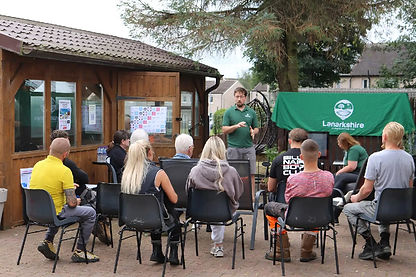
Our Climate Ready Places programme was never designed as a one-off workshop. It was conceived as a community-led process: a way of opening conversations, building confidence, sharing knowledge across generations, and turning concern into tangible, locally owned action.
This page documents that journey in full — not as a template copied from elsewhere, but as a piece of work designed, delivered and evolved in Carstairs Junction, responding to our place, our people and our priorities.
Starting with Listening: Why We Chose a Different Approach
From the beginning, we made a conscious decision to move away from traditional “information-giving” climate events. Instead of presentations and expert-led talks, we focused on:
-
Listening before leading
-
Experience before explanation
-
Participation before prescription
We recognised that residents already held deep knowledge about:
-
flooding patterns and drainage issues
-
wind exposure and storm damage
-
power cuts and transport disruption
-
food access and affordability
-
isolation during extreme weather
The challenge wasn’t awareness — it was creating a space where that knowledge could surface, connect and shape action.
Designing the Climate Ready Places Workshop
The main Climate Ready Places workshop was carefully designed to be:
-
Accessible — open to all ages, backgrounds and levels of confidence
-
Interactive — hands-on, visual and conversational
-
Welcoming — warm, informal and community-centred
-
Creative — using mapping, prompts and shared activities
-
Grounded — firmly rooted in Carstairs Junction and its realities
Rather than asking people to think globally, we invited them to think hyper-locally.
Key design elements included:
-
A large-scale community map placed at the centre of the room
-
Guided discussion prompts focused on everyday experiences
-
Space for storytelling, not just “answers”
-
Opportunities for children, adults and older residents to contribute equally
-
A pace that allowed reflection, not pressure
This was climate engagement that respected people’s time, insight and emotional bandwidth.
What We Explored Together
During the workshop, residents were invited to reflect on:
1. Observed Climate Impacts
Participants shared first-hand experiences of:
-
increased flooding and surface water
-
stronger winds and loss of mature trees
-
repeated power outages
-
unsafe walking routes during bad weather
-
disruption to daily routines and care responsibilities
These weren’t abstract risks — they were recent memories.
2. Community Strengths
Equally important was identifying what already exists:
-
practical skills held by residents
-
strong neighbour-to-neighbour support
-
willingness to volunteer and help
-
intergenerational knowledge of the area
-
pride in place and shared responsibility
Climate readiness was framed not as “fixing deficits”, but as building on strengths.
3. Vulnerabilities and Gaps
Open discussion highlighted:
-
isolation of older residents and those without transport
-
limited safe outdoor spaces
-
lack of local food growing opportunities
-
barriers for families with young children or additional needs
These insights later shaped our follow-up actions.
Turning Insight into Action
A defining feature of our Climate Ready Places work was that it did not stop at conversation.
Following the workshop, we moved into a series of follow-up initiatives designed to keep momentum, deepen understanding and translate ideas into visible progress.
Follow-up workshops and activities included:
-
Hands-on climate learning sessions
Practical activities that made climate action tangible rather than theoretical. -
Creative engagement with children and families
Using art, storytelling and mapping to involve younger voices meaningfully. -
Community mapping and place-based storytelling
Visualising risks, assets and opportunities across the village. -
Seasonal and thematic events
Linking climate resilience to food, warmth, wellbeing and togetherness.
Each activity reinforced the message that climate readiness is not a separate agenda — it is woven into how communities live, gather and care for one another.
Embedding Climate Readiness into Our Wider Work
One of the most important outcomes of the Climate Ready Places programme is that it did not sit in isolation. Instead, it became a thread running through wider Soul of the Junction initiatives, including:
-
plans for a community garden and growing spaces
-
outdoor learning and intergenerational activity
-
inclusive use of public and shared spaces
-
improved awareness of flooding and environmental history
-
long-term thinking about resilience and wellbeing
Climate readiness became part of how we plan,
not just what we deliver.
What Made This Work Different
Looking back, several factors made our CRP
programme distinctive:
-
It was community-designed, not imported
-
It valued lived experience as expertise
-
It welcomed complexity rather than simplifying it
-
It created space for emotion as well as action
-
It prioritised relationships over outputs
Importantly, it showed that rural communities are not “hard to engage” — they simply need approaches that respect their reality.
Lasting Impact and Learning
The legacy of this work is still unfolding, but its impacts are already visible:
-
increased confidence to talk about climate issues
-
stronger connections between residents
-
clearer priorities for future projects
-
a shared language around resilience and place
-
a foundation for future climate-focused funding and partnerships
Perhaps most importantly, it reaffirmed something we have always believed at Soul of the Junction:
Climate action is most powerful when it starts with people, not plans.
Looking Ahead
As we continue to develop new projects, spaces and partnerships, the principles shaped through Climate Ready Places will remain central to our work.
We will continue to:
-
listen first
-
design with, not for
-
centre care, creativity and inclusion
-
translate conversation into action
-
keep climate readiness rooted in everyday life
This programme was not a moment — it was a marker. A point at which climate readiness became part of our community story, told in our own voice.
Project Development: From Community Insight to Community Garden
A key outcome of the Climate Ready Places engagement was a clear, shared decision by the community to move towards a practical, visible project with everyday relevance. Through workshops, discussion and follow-up activity, residents consistently expressed a desire for action that would strengthen food resilience, reduce waste and bring people together around shared learning.
As a result, the community identified the creation of a small-scale community garden and growing space as the most appropriate next step.
Why a Community Garden?
The decision to focus on a community garden emerged directly from the Climate Ready Places conversations.
Residents highlighted:
-
rising food costs and concerns about access to fresh produce
-
interest in growing small amounts of vegetables and herbs locally
-
the value of shared outdoor spaces for wellbeing and connection
-
opportunities to reduce food waste through learning and skills-sharing
Rather than pursuing a large or complex infrastructure project, the community favoured an approach that was achievable, inclusive and adaptable, with benefits that could be felt quickly and locally.
What the Project Will Provide
The developing community garden space is intended to support:
-
Small-scale food growing
Raised beds and growing areas for vegetables and herbs that can be accessed by the community. -
Learning and workshops
Practical sessions focused on growing, seasonal food, food preserving and reducing food waste. -
Food resilience and skills
Sharing knowledge around planting, harvesting, storage and preservation, building confidence and capability across generations. -
Community connection
A welcoming space where residents can learn together, exchange skills and support one another.
Linking Climate Readiness to Everyday Life
The community garden project reflects the wider learning from Climate Ready Places: that climate readiness is most effective when it is embedded in everyday practices, rather than treated as a separate or abstract issue.
By focusing on food growing, preservation and waste reduction, the project directly responds to:
-
climate-related pressures on food systems
-
cost-of-living challenges
-
the need for local resilience and practical skills
-
the importance of shared, inclusive community spaces
An Ongoing, Community-Led Process
This project is not seen as an endpoint, but as part of an ongoing journey. It will continue to evolve through community involvement, learning and reflection, ensuring that it remains responsive to local needs and rooted in the values that shaped the Climate Ready Places programme.
The development of the community garden demonstrates how listening, participation and trust can lead to meaningful, place-based climate action — owned by the community and shaped by lived experience.


 CRP Junction |  CRP Junction |
|---|---|
 CRP Junction |  CRP Junction |
 CRP Junction |